Peptide Price Finder

Home · Research · GLP-1 & metabolic

5-Amino-1MQ research

What published studies found for 5-Amino-1MQ: 10 papers, 0 in humans, with sample sizes and key results.

C
Mostly animal studies
Why: Several mouse studies (obesity, aged muscle, limb ischemia, tumours) and cell work, mostly from one group; no human studies.

Evidence for 5-amino-1MQ (an NNMT inhibitor) comes entirely from mouse and cell studies, largely from one research group, showing reduced fat gain, better glucose control and improved aged-muscle function. No human trials have been published.

✓ 7 positive~ 1 mixed? 2 inconclusive

No human safety data in the published literature.

US compounding: Not compoundable. Not an FDA-approved drug and not nominated for FDA's 503A bulks list, so US pharmacies can't legally compound it. Status for every peptide.

Browse and filter these papers5-Amino-1MQ prices and vendors

Reviews

? InconclusivereviewTrends Pharmacol Sci · 2026

Emerging opportunities for nicotinamide N-methyltransferase (NNMT) inhibitor clinical translation.

No new dataReview

Review of NNMT inhibitor development: notes earlier compounds had limited preclinical success due to poor target engagement, bioavailability and unknown safety, and that clinical translation is still pending.

Studied
NNMT inhibitors across diseases (diabetes, obesity, fibrosis, cancer)
Authors' conclusion
Newer NNMT small-molecule inhibitors address earlier problems of target engagement and bioavailability and show promising safety profiles; the review assesses their therapeutic potential.
Limitations
Narrative review; no original data.
Animal & lab studies

~ MixedanimalPhysiol Rep · 2025

Nicotinamide N-methyltransferase inhibition improves limb function in experimental peripheral artery disease.

n = 24 humans and animalsRandomized placebo-controlled NNMTi in a mouse peripheral artery disease modelDaily after hindlimb ischemia

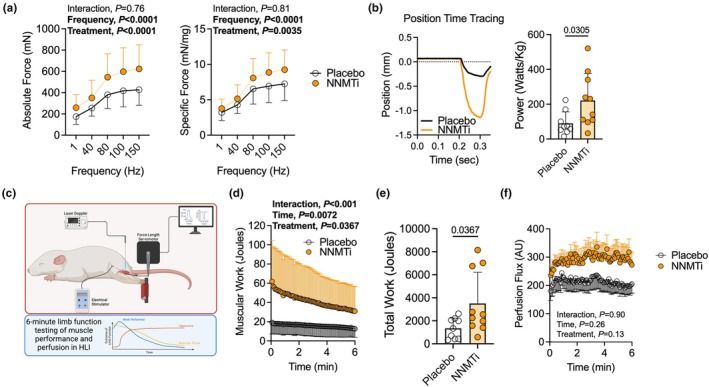
In a mouse model of limb ischemia, an NNMT inhibitor improved muscle strength and power but did not change blood-flow recovery, capillary density or muscle mass.

Key resultNNMTi significantly improved muscle strength (p < 0.0001), power (p = 0.0305) and total work (p = 0.0367) in ischemic limbs vs placebo; perfusion recovery unchanged
Studied
Male BALB/cJ mice with hindlimb ischemia; human PAD muscle datasets
Compared with
Placebo
Main outcome
Limb perfusion, muscle strength, power, total work
Sample
24 male BALB/cJ mice randomized; plus human muscle datasets
Authors' conclusion
NNMT inhibition enhanced ischemic muscle strength and performance in a preclinical PAD model independent of perfusion changes.
Limitations
Preclinical mouse model; human data were expression datasets only.
FIGURE 5: NNMT inhibition significantly improves muscle strength, power, and total work in male mice with experimental PAD. (a) Absolute and specific
FIGURE 5. From PMC12535215, CC BY (terms); resized.
✓ PositiveanimalDiabetes Obes Metab · 2024

Nicotinamide N-methyltransferase inhibition mitigates obesity-related metabolic dysfunction.

AnimalsOnce-daily 5A1MQ vs vehicle plus pharmacokinetic study (IV, oral, subcutaneous)28 days

Diet-induced obese mice given 5A1MQ daily for 28 days had dose-dependently less weight and fat gain, better glucose tolerance and insulin sensitivity, and less fatty liver.

Studied
Diet-induced obese (DIO) mice
Compared with
Vehicle
Main outcome
Body weight, fat mass, glucose tolerance, insulin sensitivity, liver histology
Authors' conclusion
5A1MQ dose-dependently limited weight and fat gain, improved glucose tolerance and insulin sensitivity, and attenuated hepatic steatosis in DIO mice, validating NNMT inhibition as an approach for obesity-related dysfunction.
Limitations
Mouse study; group sizes not given in the abstract.
✓ PositiveanimalBiochem Pharmacol · 2018

Selective and membrane-permeable small molecule inhibitors of nicotinamide N-methyltransferase reverse high fat diet-induced obesity in mice.

Humans and animalsIn vitro characterization of NNMT inhibitors plus in vivo treatment of high-fat-fed mice

Methylquinolinium NNMT inhibitors suppressed fat formation in cultured fat cells and reduced body weight and white fat mass in high-fat-fed obese mice without changing food intake.

Studied
Cultured adipocytes, Caco-2/PAMPA permeability assays and diet-induced obese mice
Main outcome
Permeability, selectivity, lipogenesis, body weight and adipose mass
Authors' conclusion
A potent NNMT inhibitor reduced body weight, white adipose mass, adipocyte size and plasma cholesterol in diet-induced obese mice without affecting food intake or causing observable adverse effects, supporting NNMT inhibitors as anti-obesity therapeutics.
Limitations
Mouse and cell data only; group sizes not given in the abstract.
✓ PositiveanimalSci Rep · 2021

Combined nicotinamide N-methyltransferase inhibition and reduced-calorie diet normalizes body composition and enhances metabolic benefits in obese mice.

AnimalsNNMT inhibitor combined with lean-diet substitution vs lean diet alone

In obese mice switched to a lean diet, adding an NNMT inhibitor sped up weight and fat loss and normalised body composition and liver fat compared with diet change alone.

Studied
Diet-induced obese mice
Compared with
Lean diet substitution alone
Main outcome
Body weight, fat loss, lean mass ratio, liver adiposity, adipose metabolome
Authors' conclusion
NNMTi plus lean diet accelerated weight and fat loss and normalized body composition and liver adiposity to lean-control levels, supporting NNMTi as a promising therapeutic for obesity and its comorbidities.
Limitations
Mouse study. The figures file for this PMID shows a different paper (ketogenic amino acid diets), so none is shown.
Figure 1: NNMTi treatment combined with a lean diet switch accelerated weight and fat loss, promoting persistent weight and fat reductions without imp
Figure 1. From PMC7952898, CC BY (terms); resized.
✓ PositiveanimalBiochem Pharmacol · 2019

Small molecule nicotinamide N-methyltransferase inhibitor activates senescent muscle stem cells and improves regenerative capacity of aged skeletal muscle.

Humans and animalsNNMTi (5 or 10 mg/kg) vs saline after acute muscle injury, with in vitro myoblast work1 or 3 weeks post-injury

In 24-month-old injured mice, NNMT inhibitor treatment increased muscle stem-cell activity, roughly doubled regenerating fibre size and improved contractile function.

Key resultNearly 2-fold greater myofiber cross-sectional area and about 70% greater peak torque of the TA in NNMTi-treated mice compared with controls
Studied
24-month-old mice with barium chloride muscle injury, plus C2C12 myoblasts
Compared with
Saline control
Main outcome
Muscle stem cell activity, myofiber cross-sectional area, contractile function
Authors' conclusion
NNMT inhibitors may enhance aged muscle regeneration by rescuing muscle stem cell function; the authors support development of NNMTi for recovery after musculoskeletal injury.
Limitations
Mouse and cell study; group sizes not given in the abstract. The figures file for this PMID shows a different paper, so none is shown.
✓ PositiveanimalSci Rep · 2024

Nicotinamide N-methyltransferase inhibition mimics and boosts exercise-mediated improvements in muscle function in aged mice.

AnimalsNNMTi, intensive exercise or both, vs sedentary controlsFrom 22 to 24 months of age

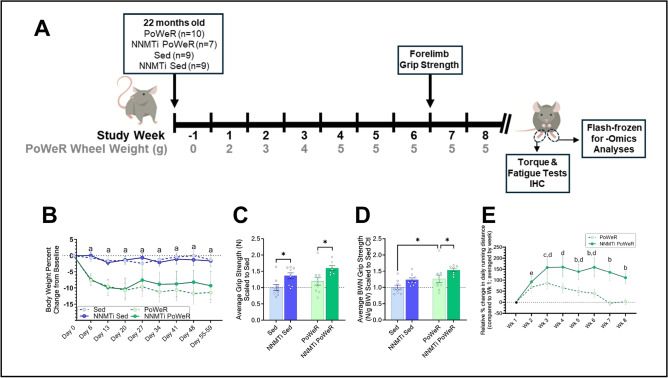
Aged mice on an NNMT inhibitor had about 40% greater grip strength than sedentary controls, and the effect added to exercise training.

Key resultNNMTi-treated sedentary mice showed ~ 40% greater grip strength than sedentary controls; exercise alone 20%; combined 60%
Studied
Aged mice treated from 22 to 24 months of age
Compared with
Sedentary controls
Main outcome
Grip strength, running capacity, muscle torque, fiber area, intramyocellular lipid
Authors' conclusion
NNMTi alone or with exercise improved aged muscle function in an additive way, suggesting NNMTi-based drugs may help treat sarcopenia and age-related myopathies.
Limitations
Mouse study. The figures file for this PMID shows a different paper (BioVenn), so none is shown.
Figure 1: Muscle performance is enhanced by NNMTi treatment, exceeding exercise effects in Sed mice and additively improving performance in exercised
Figure 1. From PMC11226645, CC BY (terms); resized.
✓ PositiveanimalJ Immunother Cancer · 2024

NAD+ metabolism enzyme NNMT in cancer-associated fibroblasts drives tumor progression and resistance to immunotherapy by modulating macrophages in urothelial bladder cancer.

Humans and animalsMixed human tissue expression analysis plus mouse tumour models using 5-amino-1-methylquinolinium iodide as NNMT inhibitor

In urothelial bladder cancer mouse models, the NNMT inhibitor 5-amino-1-methylquinolinium iodide reduced tumor growth and enhanced the apoptotic effect of anti-PD-L1 antibody; the paper's main data are NNMT expression in patient tumours, not the compound.

Key resultNNMT+ cancer-associated fibroblasts were associated with non-response to PD-L1 blockade in patients; the inhibitor significantly reduced tumour growth in mice
Studied
Patient bladder cancer samples (expression analysis in two cohorts) and urothelial bladder cancer mouse models
Compared with
Anti-PD-L1 alone / untreated tumours
Main outcome
Tumour growth and apoptosis with NNMT inhibition plus anti-PD-L1
Authors' conclusion
The authors concluded NNMT in cancer-associated fibroblasts drives tumour progression and immunotherapy resistance, and that targeting NNMT may help.
Limitations
The inhibitor was used only in mouse models; focus is the NNMT target rather than the compound as a therapy.
? InconclusiveanimalSci Rep · 2022

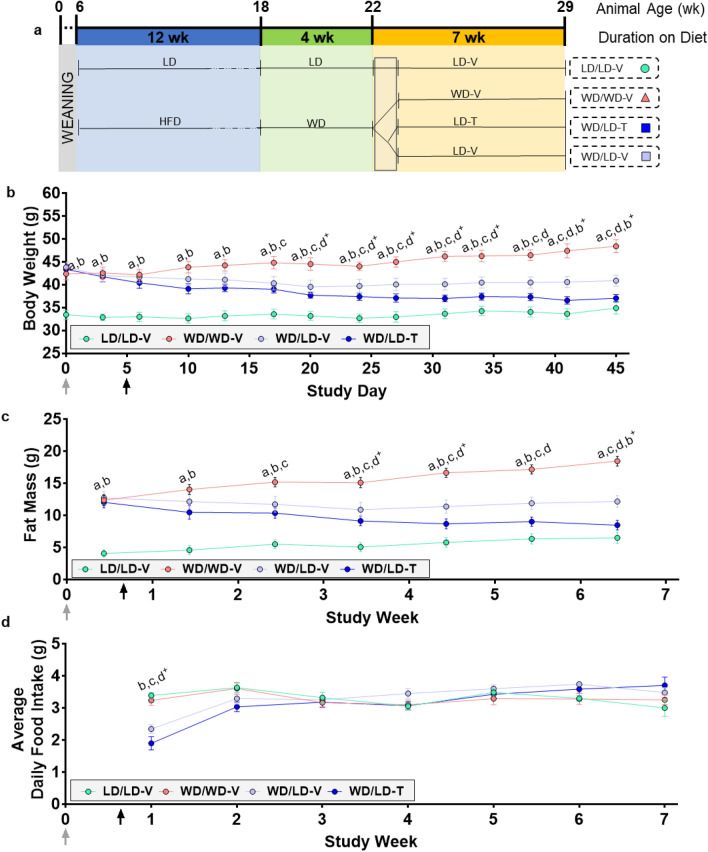
Reduced calorie diet combined with NNMT inhibition establishes a distinct microbiome in DIO mice.

AnimalsAnimal study of cecal microbiome with NNMT inhibitor vs vehicle

In diet-induced obese mice, 5-amino-1-methylquinolinium plus a low-fat diet produced a distinct gut microbiome pattern (less Erysipelatoclostridium, more Lactobacillus) than vehicle; descriptive microbiome study with no clinical outcome.

Studied
Diet-induced obese mice switched from Western to low-fat diet, with lean and obese controls
Compared with
Vehicle-treated mice and lean/obese controls
Main outcome
Cecal microbiome composition and diversity
Authors' conclusion
NNMTi-treated mice on a low-fat diet had a distinct microbiome pattern; the authors say the results provide a foundation for future investigations.
Limitations
Descriptive mouse microbiome study; alpha diversity did not differ between groups.
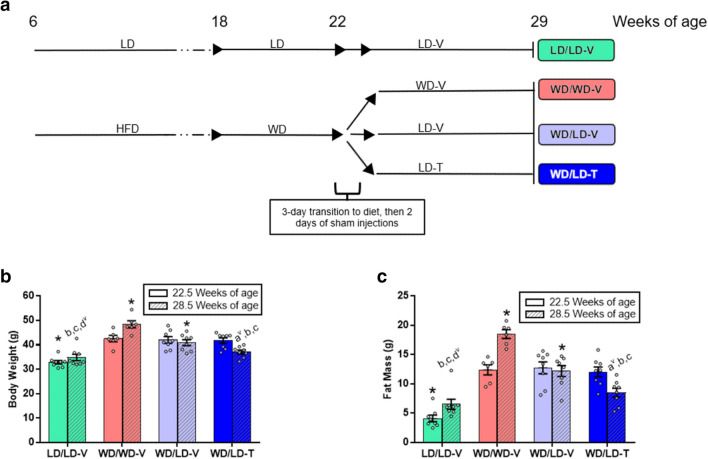
Figure 1: Diet and NNMTi treatment status substantially altered body weight and fat mass. a After weaning, mice were placed on a high-fat diet (HFD, 6
Figure 1. From PMC8748953, CC BY (terms); resized.
✓ Positivein vitroBiomolecules · 2025

Small Molecule Inhibitors of Nicotinamide N-Methyltransferase Enzyme for the Treatment of Osteosarcoma and Merkel Cell Carcinoma: Potential for the Development of a Targeted Therapeutic Strategy.

Cells / labIn vitro treatment with 5-AMQ, 6-methoxynicotinamide and EL-1, alone and with cisplatin

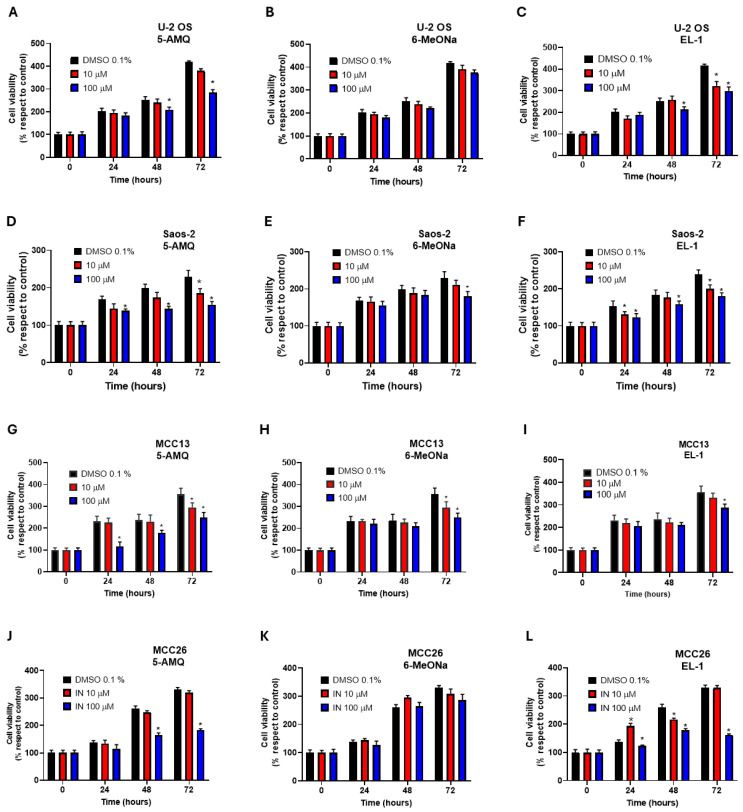
In osteosarcoma and Merkel cell carcinoma cell lines, the NNMT inhibitor 5-amino-1-methylquinolinium (5-AMQ) and two other inhibitors reduced viability, raised ROS and activated apoptosis; a possible anticancer use rather than the usual metabolic claims.

Studied
U-2 OS and Saos-2 osteosarcoma and MCC13 and MCC26 Merkel cell carcinoma cell lines
Compared with
Untreated cells
Main outcome
Cell viability, reactive oxygen species and apoptosis
Authors' conclusion
Cells treated with NNMT inhibitors showed significantly reduced viability, increased ROS and apoptosis activation; the authors suggest inhibitors as a rationale for anticancer therapy.
Limitations
Cell-line study; three inhibitors tested together.
Figure 1: Effect of NNMT inhibitors on viability of OS and MCC cell lines. U-2 OS (A–C), Saos-2 (D–F), MCC13 (G–I) and MCC26 (J–L) cells were incubate
Figure 1. From PMC12650368, CC BY (terms); resized.

Verdicts are judged on each paper's own main outcome; grades run from A (strong human evidence) to D (little or none). Details are read from the abstracts, and figures are reproduced only from openly licensed full texts. Not medical advice.