Peptide Price Finder

Home · Research · Cognitive & nootropic

P021 research

What published studies found for P021: 11 papers, 0 in humans, with sample sizes and key results.

C
Mostly animal studies
Why: Numerous rodent studies, almost all from one laboratory, show benefits in Alzheimer's, aging and Down syndrome models; no human data.

P021 (an adamantane-modified CNTF-derived peptide) has been studied only in rodents and cells, almost entirely by one laboratory; results in Alzheimer's, aging and Down syndrome mouse models are consistently positive, but there are no human studies. Added work is small, mostly one laboratory's studies in rodents, with no human data.

✓ 11 positive

No human safety data in the published literature.

US compounding: Not compoundable. Not an FDA-approved drug and not nominated for FDA's 503A bulks list, so US pharmacies can't legally compound it. Status for every peptide.

Browse and filter these papersP021 prices and vendors

Reviews

✓ PositivereviewBiomolecules · 2022

Alzheimer's Disease: Challenges and a Therapeutic Opportunity to Treat It with a Neurotrophic Compound.

No new dataNarrative review

Review by the originating lab summarizing preclinical evidence that P021 promotes neurogenesis and synaptic plasticity and reduces AD-like pathology in rodent models.

Studied
Alzheimer's disease; preclinical studies of P021 reviewed
Authors' conclusion
Reviews AD pathology and preclinical studies of P021, a small neurotrophic peptide mimetic, as a potential therapeutic for AD and related neurodegenerative disorders.
Limitations
Authors note the review focuses only on P021 and relevant literature; preclinical data only.
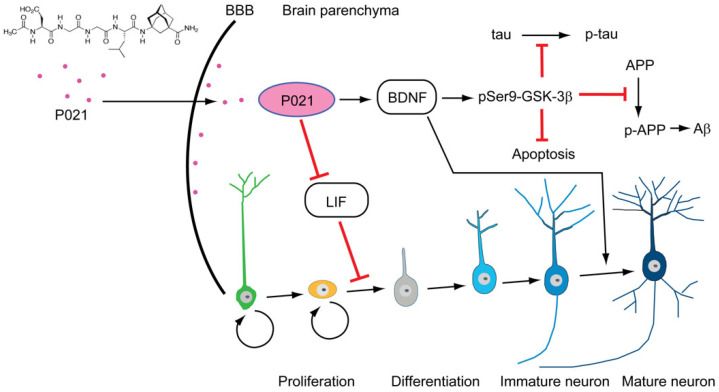
Figure 3: Mechanism of action of P021. P021 acts by competitively inhibiting leukemia inhibitory factor (LIF) signaling and increasing the expression
Figure 3. From PMC9599095, CC BY (terms); resized.

Animal & lab studies

✓ PositiveanimalNeurobiol Dis · 2014

Disease modifying effect of chronic oral treatment with a neurotrophic peptidergic compound in a triple transgenic mouse model of Alzheimer's disease.

AnimalsChronic oral treatment with P021 vs vehicle diet in a transgenic AD mouse model12 months, starting at 9-10 months of age

12 months of oral P021 in 3xTg-AD mice reduced tau hyperphosphorylation and soluble amyloid-beta and rescued cognitive, neurogenesis and synaptic deficits.

Studied
Female 3xTg-AD and wild type mice
Compared with
Vehicle diet
Main outcome
Tau and Abeta pathology, BDNF/GSK3beta, cognition, neurogenesis, synaptic plasticity
Authors' conclusion
P021 reduced tau hyperphosphorylation and soluble Abeta and rescued cognition, neurogenesis and synaptic plasticity deficits in 3xTg-AD mice, suggesting potential as a disease-modifying AD therapy.
Limitations
Mouse study; effect on Abeta plaque load was only a trend.
✓ PositiveanimalJ Alzheimers Dis · 2017

Prevention of Amyloid-β and Tau Pathologies, Associated Neurodegeneration, and Cognitive Deficit by Early Treatment with a Neurotrophic Compound.

AnimalsEarly (preventive) continuous P021 treatment in a transgenic AD mouse modelFollowed at 9, 15 and 18 months post-treatment

Early continuous P021 in 3xTg-AD mice prevented neurodegeneration, amyloid and tau pathology, rescued episodic memory and reduced mortality.

Studied
Female 3xTg-AD mice treated from 3 months of age
Compared with
Not stated in abstract (presumably untreated controls)
Main outcome
Neurodegeneration, Abeta and tau pathologies, episodic memory, mortality
Authors' conclusion
P021 started during the synaptic compensation period prevented neurodegeneration, Abeta and tau pathologies, rescued episodic memory impairment and markedly reduced mortality in 3xTg-AD mice.
Limitations
Mouse model only.
✓ PositiveanimalNeurobiol Aging · 2014

Rescue of cognitive-aging by administration of a neurogenic and/or neurotrophic compound.

AnimalsChronic oral administration of P021

Chronic oral P021 in 22–24-month-old rats reduced age-related learning and memory decline and restored neurogenesis and synaptic markers.

Studied
Aged (22 to 24-month-old) Fisher rats
Compared with
Aged untreated rats; young rats for comparison
Main outcome
Learning and memory, neurogenesis, BDNF, synaptic deficits, hippocampal metabolites
Authors' conclusion
P021 significantly reduced age-dependent decline in learning and memory, restored neurogenesis and synaptic deficits, and increased BDNF in aged rats; a potential approach for cognitive aging.
Limitations
Rat study; group sizes not given in the abstract.
✓ PositiveanimalJ Alzheimers Dis · 2015

Elevated Tau Level in Aged Rat Cerebrospinal Fluid Reduced by Treatment with a Neurotrophic Compound.

AnimalsChronic oral P021 treatment with CSF and brain tau measurement

In aged rats, chronic P021 lowered brain and CSF total tau (but not CSF amyloid) and did not induce a detectable immune reaction.

Studied
Aged Fisher rats
Compared with
Young adult rats (reference levels)
Main outcome
Brain and CSF tau and Abeta/AbetaPP levels
Authors' conclusion
P021 is blood-brain-barrier permeable and reduced brain total tau and CSF tau, but not Abeta/AbetaPP, in aged rats to young adult levels, without detectable immune reaction.
Limitations
Rat study only.
✓ PositiveanimalSci Rep · 2017

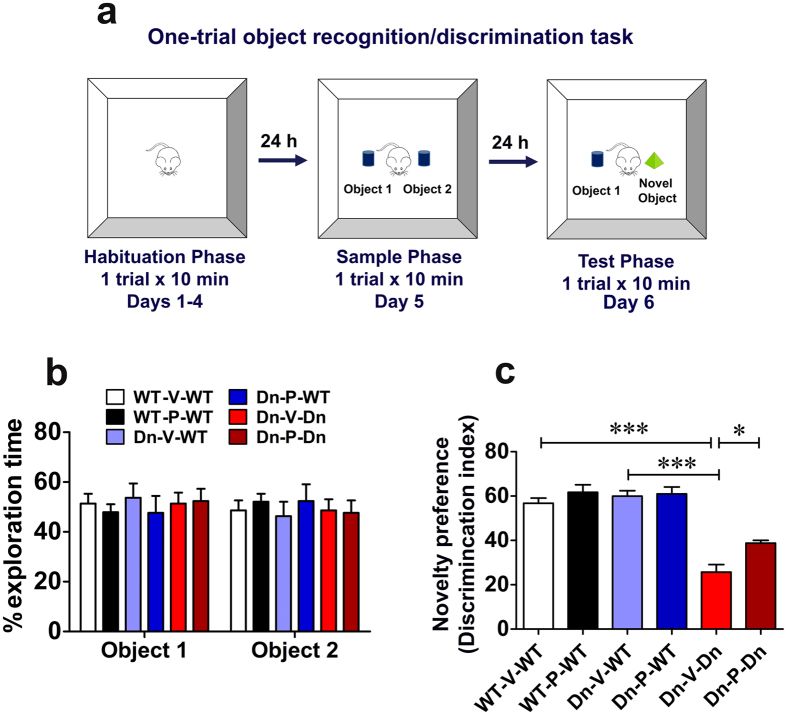
Early neurotrophic pharmacotherapy rescues developmental delay and Alzheimer's-like memory deficits in the Ts65Dn mouse model of Down syndrome.

AnimalsPrenatal to early postnatal P021 treatmentPrenatal through early postnatal; assessed at 3 weeks and about 7 months of age

Prenatal-to-early-postnatal P021 rescued developmental delay and later memory deficits in Ts65Dn Down syndrome model mice.

Studied
Ts65Dn mouse model of Down syndrome
Main outcome
Developmental delay, hippocampus-dependent memory, synaptic markers
Authors' conclusion
Early neurotrophic support rescued developmental delay in pups and AD-like memory impairments in adult Ts65Dn mice and altered GSK3beta activity and plasticity markers.
Limitations
Mouse model only. The figures file for this PMID appears to be from a different (DYRK1A) paper, so no figure is shown.
Figure 4: Prenatal to early postnatal treatment with P021 ameliorates impairment in long-term recognition memory in adult Ts65Dn mice.(a) The experime
Figure 4. From PMC5377379, CC BY (terms); resized.
✓ PositiveanimalJ Neurodev Disord · 2024

Effects of a ciliary neurotrophic factor (CNTF) small-molecule peptide mimetic in an in vitro and in vivo model of CDKL5 deficiency disorder.

Humans and animalsIn vitro cell model plus in vivo chronic mouse treatment

In CDKL5-deficiency cell and mouse models, P021 restored neuronal proliferation, survival and maturation deficits.

Studied
SH-CDKL5-KO cells and young and adult Cdkl5 KO mice (CDKL5 deficiency disorder model)
Main outcome
Neuronal proliferation, survival, maturation; BDNF; neuroanatomical and behavioral defects
Authors' conclusion
P021 restored proliferation, survival and maturation deficits in the cell model, but chronic in vivo treatment failed to increase BDNF or improve neuroanatomical defects in KO mice, with limited behavioral benefit.
Limitations
In vivo results were largely negative; treatment timing or duration may need to change.
✓ PositiveanimalAlzheimers Res Ther · 2020

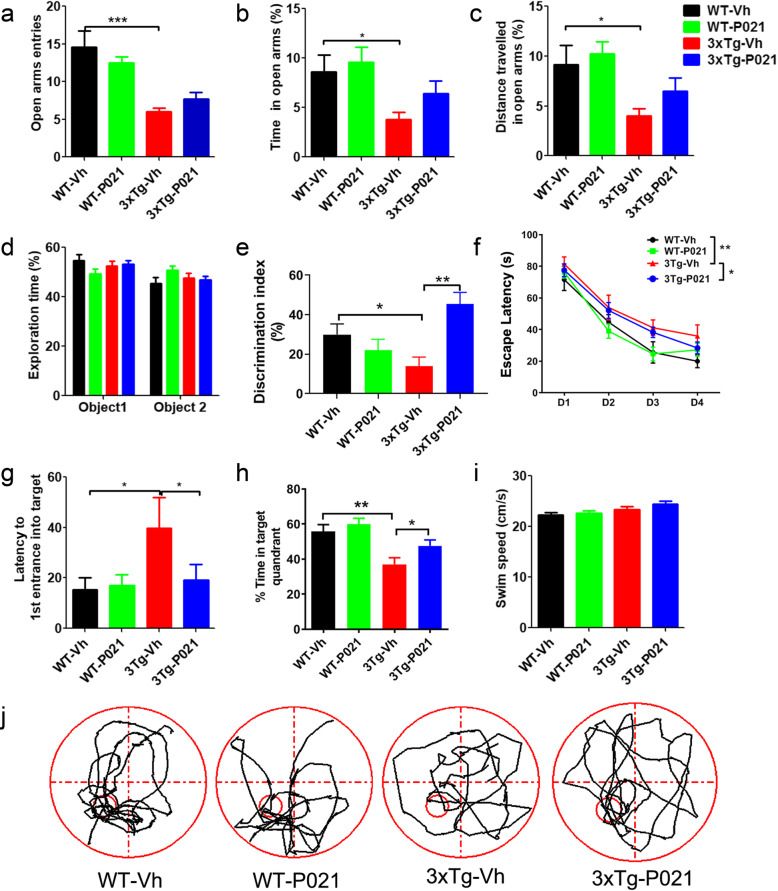
Prenatal to early postnatal neurotrophic treatment prevents Alzheimer-like behavior and pathology in mice.

AnimalsOral P021 diet from prenatal day 8 to postnatal day 21, then standard dietTreatment to postnatal day 21; assessed at 4 and 22 months

Prenatal-to-weaning P021 in 3xTg-AD mice rescued cognitive deficits at 4 months and reduced tau pathology and plaque load at 22 months.

Studied
Female 3xTg-AD and wild-type mice
Compared with
Vehicle diet
Main outcome
Cognition, tau and Abeta pathology, postsynaptic markers, neuroinflammation
Authors' conclusion
Early P021 treatment rescued cognitive deficits at 4 months, reduced tau pathology and Abeta plaque load at 22 months, and improved some synaptic and neuroinflammation markers; a potential early prevention strategy.
Limitations
Mouse model only.
Fig. 2: P021 treatment from embryonic day 8 through postnatal day 21 prevents the memory deficits at the age of 3–4 months in 3xTg-AD mice. Elevated
Fig. 2. From PMC7450938, CC BY (terms); resized.
✓ PositiveanimalFEBS Lett · 2010

Neurotrophic peptides incorporating adamantane improve learning and memory, promote neurogenesis and synaptic plasticity in mice.

AnimalsAnimal study of peripherally administered P21

The original report: P21 (Ac-DGGLAG-NH2) given peripherally improved learning and spatial memory in normal adult mice and increased neurogenesis in the dentate gyrus.

Studied
Normal adult C57Bl6 mice
Main outcome
Learning, short-term and spatial memory, neurogenesis
Authors' conclusion
P21 enhanced learning and memory and promoted neurogenesis and maturation of new neurons in mice.
Limitations
Mouse study, brief abstract without numbers.
✓ PositiveanimalFront Aging Neurosci · 2019

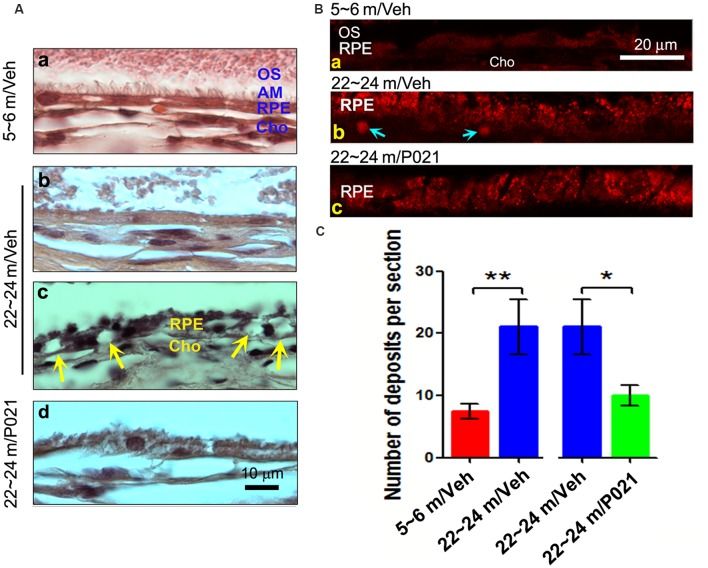
Inhibition of AMD-Like Pathology With a Neurotrophic Compound in Aged Rats and 3xTg-AD Mice.

AnimalsAnimal study with chronic P021 treatment3 months in rats, 18 months in mice

Aged rats and 3xTg-AD mice: chronic P021 (3 months in rats, 18 months in mice) reduced age-related retinal pathology resembling macular degeneration; animal study from the compound's developers.

Studied
Aged rats and 3xTg-AD mice
Main outcome
Retinal degeneration, gliosis, tau, amyloid/APP and VEGF
Authors' conclusion
Chronic P021 ameliorated AMD-like retinal pathology, indicating therapeutic potential in AMD and Alzheimer-related retinal changes.
Limitations
Animal study; no numbers in abstract; same laboratory as other P021 work.
Figure 2: Chronic treatment with P021 reduces AMD-like pathology of RPE in aged rats. (A) H & E staining of RPE in the retina. AM was short or out of
Figure 2. From PMC6877482, CC BY (terms); resized.
✓ PositiveanimalJ Alzheimers Dis · 2021

Neurotrophic Treatment Initiated During Early Postnatal Development Prevents the Alzheimer-Like Behavior and Synaptic Dysfunction.

AnimalsAnimal study of P021 in diet vs vehicle dietBirth to postnatal day 120

3xTg-AD mice treated with P021 from birth to day 120 avoided cognitive impairment and showed higher pCREB and BDNF and less synaptic protein loss at 4 months.

Studied
Female 3xTg-AD and wild-type mice
Compared with
Vehicle diet
Main outcome
Cognitive function and synaptic plasticity markers
Authors' conclusion
Treatment during early development prevented cognitive impairment and synaptic protein deficits in the AD mouse model.
Limitations
Mouse study; no numbers in abstract; same laboratory.

Verdicts are judged on each paper's own main outcome; grades run from A (strong human evidence) to D (little or none). Details are read from the abstracts, and figures are reproduced only from openly licensed full texts. Not medical advice.