Peptide Price Finder

Home · Research · Muscle & performance

PEG-MGF research

What published studies found for PEG-MGF: 1 paper, 0 in humans, with sample sizes and key results.

D
Little or no evidence
Why: No studies of PEG-MGF at all; it appears only in a review of unregulated performance peptides.

No published studies of pegylated mechano growth factor (PEG-MGF) as a treatment were found in PubMed — neither human nor animal. It appears only in a review of unregulated performance peptides; evidence for the non-pegylated MGF peptide is limited to animal and cell studies.

? 1 inconclusive

No human or animal safety data for PEG-MGF exist in the published literature.

US compounding: Under review, not compoundable yet. Removed from Category 2 in April 2026; FDA plans to put it to its compounding advisory committee before the end of February 2027. Until FDA adds it to the 503A bulks list, US pharmacies can't compound it from bulk. Status for every peptide.

Browse and filter these papersPEG-MGF prices and vendors

Reviews

? InconclusivereviewFront Endocrinol (Lausanne) · 2026

The emerging landscape of performance-enhancing peptides modulating GH-IGF1 axis: bridging the gap between clinical evidence and patient self-administration.

No new dataNarrative review of unregulated GH-IGF-1 axis peptides including PEG-MGF

Narrative review listing PEG-MGF among unregulated 'research compound' peptides, stratified into the tier lacking human studies, and highlighting endocrine-metabolic and theoretical mitogenic risks.

Authors' conclusion
Peptides are stratified into evidence tiers from regulatory-grade trial data to no human studies; performance benefits are uncertain, and the authors propose a clinical assessment algorithm without legitimising off-label use.
Limitations
Narrative review; some peptides lack human studies.
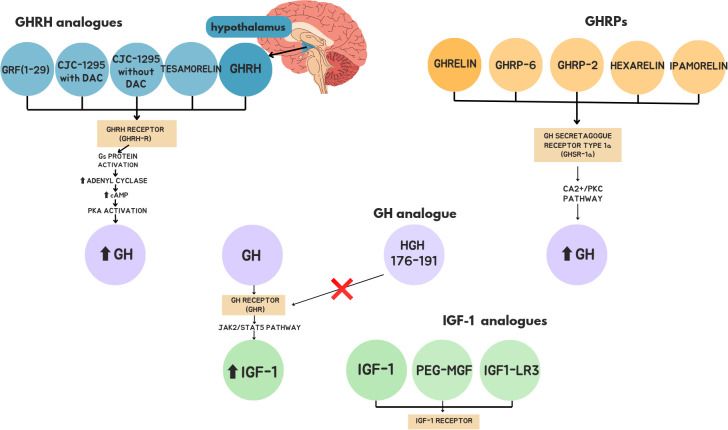
Figure 2: Overview of the discussed compounds and their receptors. The diagram summarises the principal receptor targets and canonical intracellular s
Figure 2. From PMC13322892, CC BY (terms); resized.

Verdicts are judged on each paper's own main outcome; grades run from A (strong human evidence) to D (little or none). Details are read from the abstracts, and figures are reproduced only from openly licensed full texts. Not medical advice.