Peptide Price Finder

Home · Research · Supplies

Sterile Water research

What published studies found for Sterile Water: 6 papers, 2 in humans, with sample sizes and key results, plus 52 registered clinical trials.

D
Little or no evidence
Why: No controlled or animal studies; only case reports, observational data and a lab study, mostly on harm when it is infused undiluted or contaminated.

Sterile water for injection is safe as a diluent - the drug being dissolved makes the final solution roughly isotonic - but it must never be infused as-is. Given intravenously in volume it causes haemolysis and water intoxication, and case reports include cardiac arrest, kidney failure and death.

✗ 4 negative~ 2 mixed

Sterile water is for reconstitution, not for direct infusion: unlike bacteriostatic water it contains no preservative, so an opened container is single-use and a punctured vial kept for repeat draws is a contamination risk.

Browse and filter these papers

Reported side effects

Registered clinical trials

52 trials of Sterile Water on ClinicalTrials.gov: 7 active, 31 completed, 8 with posted results. Registered trials include ones that haven't published yet.

TrialStatusPhasePeopleSponsor
A Study of Low-dose Intracoronary Thrombolytic Therapy in STEMI (Heart Attack) Patients.NCT03998319 · started 2021-10-14RecruitingPhase 3445University of Sydney
Caffeine Citrate in Preterm Infants at Risk of Apnea in ZambiaNCT06518603 · started 2026-06-17RecruitingPhase 4340University of Alabama at Birmingham
Betadine vs Sterile Water for Periurethral PreparationNCT07044726 · started 2025-06-30RecruitingPhase 4148University of Louisville
BabySTrong II taVNS Feeding TrialNCT07049952 · started 2025-11-16RecruitingPhase 2, Phase 388Medical University of South Carolina
Caffeine Use in the Management of Preterm InfantsNCT06327152 · started 2024-02-22Active, not recruitingPhase 280University of California, Irvine
Safety and Immunogenicity Trial of PepGNP-COVID19 Vaccine in AdultsNCT07183709 · started 2026-02-02Active, not recruitingPhase 160National Institute of Allergy and Infectious Diseases (NIAID)
Be Sweet to Babies During NasolaryngoscopyNCT06641687 · started 2024-09-23Recruiting–60The Hospital for Sick Children
Test for Pre Operative Skin PreparationsNCT00799812 · started 2007-11-13 · results postedCompletedPhase 3335C. R. Bard
Efficacy of Oral Rinses for Inactivation of COVID-19 (MOR2)NCT05178173 · started 2022-01-20 · results postedCompleted–230University of North Carolina, Chapel Hill
Immunogenicity Study of Vacc-4x Versus Placebo in Patients Infected With HIVNCT00659789 · started 2008-08 · results postedCompletedPhase 2137Bionor Immuno AS
Vapocoolant (Pain Ease) Use for VenipunctureNCT01712776 · started 2011-04 · results postedCompleted–100The Cleveland Clinic
Impact of Oral Application of Gastrografin on the Meconium Evacuation in Very Low Birth Weight InfantsNCT01515696 · started 2007-10 · results postedCompletedPhase 496Nadja Haiden,MD

All 52 Sterile Water trials, with countries and recruiting status

Human studies

✗ Negativehuman observationalHarm Reduct J · 2020

Navigating environmental constraints to injection preparation: the use of saliva and other alternatives to sterile water among unstably housed PWID in London.

n = 455 humansQuestionnaire and in-depth qualitative interviews (Care and Prevent study)

A survey of 455 people who inject drugs and 32 interviews in London found restricted access to sterile water drove use of saliva and other substitutes, alongside a 65% lifetime rate of bacterial infections.

Key result78% reported lifetime street homelessness, 65% bacterial infections and 30% related hospitalisation
Studied
People who inject drugs in London, many street homeless or unstably housed
Main outcome
Access to sterile water and injection preparation practices
Sample
455 survey respondents plus 32 qualitative interviews
Authors' conclusion
Restricted access to sterile water led to alternatives such as puddle water, toilet cistern water, cola and saliva, potentially raising infection risk; water for injection should be made available.
Limitations
Self-reported data from a specific London sample; no comparison group.
✗ Negativehuman observationalMed J Aust · 1990

An Australia-wide epidemic of Pseudomonas pickettii bacteraemia due to contaminated "sterile" water for injection.

20 bacteraemia cases (19 P. pickettii, 1 P. cepacia)Outbreak report

Nineteen cases of Pseudomonas pickettii and one of Pseudomonas cepacia bacteraemia across Australia were traced to one commercial batch of 'sterile' water for injection contaminated with about 1000 organisms per millilitre.

Key resultNineteen cases of Pseudomonas pickettii and one of Pseudomonas cepacia bacteraemia; ampoules contained approximately 10(3) organisms per millilitre
Studied
Patients with nosocomial sepsis linked to one contaminated batch of water for injection, Australia
Main outcome
Bacteraemia cases traced to contaminated water for injection
Authors' conclusion
An Australia-wide outbreak of sepsis was linked to a single contaminated batch of commercial water for injection; lack of a central reporting system delayed recognition.
Limitations
Outbreak description without a comparison group.

Reviews

~ MixedreviewAnaesth Intensive Care · 2014

Intravenous infusion of sterile water for the treatment of hypernatraemia.

Literature review (number of studies not stated in abstract)Literature review (Medline, Embase, ProQuest, guideline sites)

A literature review of intravenous sterile water to treat hypernatraemia found little research and no guidelines, concluding it can be given relatively safely only via a central line in selected patients.

Studied
Patients with hypernatraemia unable to take enteral water (e.g. postoperative, hyperglycaemic on insulin infusion)
Main outcome
Use of IV sterile water to lower serum sodium
Authors' conclusion
Little research exists and absence of guidelines has limited use; sterile water can be administered relatively safely via a central line, even as an off-label drug.
Limitations
Little research available; no guidelines.

Human studies

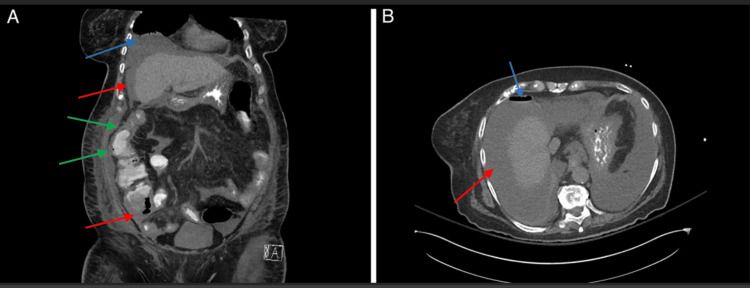
✗ Negativecase reportCureus · 2025

Iatrogenic Water Intoxication After Intravenous Infusion of Sterile Water: A Rare and Preventable Case.

Single case report (one elderly woman)Case report

An elderly woman with a single kidney given a vitamin infusion in a litre of sterile water at a medical spa developed flash pulmonary oedema and cardiac arrest, then metabolic acidosis, suspected haemolysis and anuric renal failure requiring dialysis, followed by ischaemic colitis and colectomy.

Studied
Elderly woman with a solitary kidney who received an IV vitamin infusion in a liter of sterile water at a medical spa
Main outcome
Clinical course after infusion
Authors' conclusion
The case underscores the catastrophic impact of inappropriate intravenous fluid administration and highlights the urgent need for increased regulatory oversight in non-hospital settings.
Limitations
Single case report; contributing factors (suspected hemolysis, high-dose vitamin C, reduced renal reserve) could not be separated.
Figure 1: Representative images from CT abdomen/pelvisPertinent findings include: (A) moderate volume of free fluid (red arrows), pneumoperitoneum (bl
Figure 1. From PMC12359097, CC BY (terms); resized.
~ Mixedcase reportArch Intern Med · 1986

Hyperosmolar coma treated with intravenous sterile water. A study of three cases.

Three patients (case series)Case series of three patients

Three patients in hyperosmolar coma were given intravenous sterile water through a central venous catheter after sodium and dextrose solutions failed; all survived with no biochemical evidence of haemolysis.

Studied
Three patients in hyperosmolar coma with pulmonary edema, rising hypernatremia and severe hyperglycemia
Main outcome
Improvement of hyperosmolar state; hemolysis and cerebral edema
Authors' conclusion
IV sterile water via a central venous catheter improved the hyperosmolar state, and all patients survived without biochemical evidence of hemolysis or clinical evidence of cerebral edema.
Limitations
Three cases only, no control group.

Animal & lab studies

✗ Negativein vitroJ Oncol Pharm Pract · 2009

Evaluation of osmolality and pH of various concentrations of methotrexate, cytarabine, and thiotepa prepared in normal saline, sterile water for injection, and lactated Ringer's solution for intrathecal administration.

Survey of 9 centers; 44 reports reviewed; in vitro measurementsSurvey, literature review and in vitro pH/osmolality measurement

Measurement of methotrexate, cytarabine and thiotepa prepared in saline, sterile water and lactated Ringer's showed the diluent changes the final pH and osmolality, which matters for intrathecal neurotoxicity.

Key resultExcept for cytarabine 10 and 25 mg/mL, all tested solutions had pH within 10% of the physiologic range of CSF
Studied
Methotrexate, cytarabine and thiotepa preparations in saline, sterile water and lactated Ringer's (in vitro)
Compared with
Normal saline, sterile water for injection, lactated Ringer's
Main outcome
pH and osmolality of intrathecal chemotherapy preparations
Authors' conclusion
Most methotrexate preparations likely have pH and osmolality comparable to CSF; cytarabine may show significantly higher pH, and thiotepa generally lower osmolality, than CSF.
Limitations
In vitro measurements only; limited published literature.

Verdicts are judged on each paper's own main outcome; grades run from A (strong human evidence) to D (little or none). Details are read from the abstracts, and figures are reproduced only from openly licensed full texts. Not medical advice.