Peptide Price Finder

Home · Research · Sexual health & hormones

HMG research

What published studies found for HMG: 8 papers, 8 in humans, with sample sizes and key results, plus 81 registered clinical trials.

A
Strong human evidence
Why: Approved fertility drug; a 620-woman RCT and a Cochrane network meta-analysis of RCTs show results broadly comparable to recombinant FSH in IVF.

Human menopausal gonadotropin (menotropin) is an established prescription fertility drug with extensive human evidence, including large randomized trials and Cochrane meta-analyses; in IVF it performs broadly comparably to recombinant FSH, and in men with hypogonadotropic hypogonadism it reliably induces sperm production. Its main recognized risk is ovarian hyperstimulation in women.

✓ 4 positive✗ 1 negative~ 2 mixed? 1 inconclusive

Safety data come from women undergoing fertility treatment; OHSS rates depend heavily on patient population and protocol (9.7% in high responders vs 0.6% severe OHSS in a general IVF cohort).

US compounding: Approved biologic: not compoundable. Menotropins are an FDA-approved biologic; biologics can't be compounded from bulk under section 503A. Status for every peptide.

Browse and filter these papers

Reported side effects

Registered clinical trials

81 trials of HMG on ClinicalTrials.gov: 7 active, 54 completed, 5 with posted results. Registered trials include ones that haven't published yet.

TrialStatusPhasePeopleSponsor
Alport Therapy Registry - European Initiative Towards Delaying Renal Failure in Alport SyndromeNCT02378805 · started 1995-07Recruiting–800University Hospital Goettingen
Human Menopausal Gonadotropin Research in Infertility Assessing Cumulative Live Birth With Frozen Embryo Transfer.NCT07216742 · started 2025-11-01RecruitingPhase 3659Granata Bio Corporation
A Study to Compare the Efficacy and Safety of Follitropin Alfa/Lutropin Alfa Versus hMG in Japanese Participants With LH and FSH Deficiency Undergoing ART (HINATA)NCT07340827 · started 2026-02-04RecruitingPhase 3266Merck Healthcare KGaA, Darmstadt, Germany, an affiliate of Merck KGaA, Darmstadt, Germany
Embryo QUAlity in Ovarian Stimulation With hMG.NCT07691073 · started 2026-09Not yet recruitingPhase 4240Fundacion Dexeus
Menopur And Rekovelle Combination Study Version 2.0NCT06997900 · started 2025-07-04RecruitingPhase 2200Clinique Ovo
Evaluation of Treatments for Sore Throat Associated With Acute Pharyngitis and/or Viral TonsillitisNCT07569939 · started 2026-07-29Recruiting–160University Hospital, Clermont-Ferrand
Impact of Medically Supervised Performance-Enhancing Substances (PES) on Elite AthletesNCT07568574 · started 2026-03-12Enrolling by invitation–60Enhanced Emirates Limited
Safety and Efficacy Study in in Vitro Fertilisation (IVF) PatientsNCT01312766 · started 2011-02 · results postedCompletedPhase 3270IBSA Institut Biochimique SA
Randomized Trial of Imaging Versus Risk Factor-Based Therapy for Plaque RegressionNCT01212900 · started 2010-09-30 · results postedCompletedPhase 4230National Heart, Lung, and Blood Institute (NHLBI)
Rosuvastatin in the Long-term Treatment of Hypercholesterolaemic Subjects With Coronary Heart DiseaseNCT00329160 · started 2005-10 · results postedCompletedPhase 4214AstraZeneca
Cumulative Pregnancy Rate With Lower and Higher Gonadotropin Dose During IVF Among Poor RespondersNCT05103228 · started 2021-12-02 · results postedCompleted–190Peter Kovacs MD
Follicular Steroid Genesis in Controlled Ovarian StimulationNCT02738580 · started 2016-10-18 · results postedCompletedPhase 4112Instituto Valenciano de Infertilidad, IVI VALENCIA

All 81 HMG trials, with countries and recruiting status

Meta-analyses & systematic reviews

~ Mixedmeta-analysisCochrane Database Syst Rev · 2025

Controlled ovarian stimulation protocols for assisted reproduction: a network meta-analysis.

n = 59,086 humansCochrane systematic review and network meta-analysis of RCTs

Cochrane network meta-analysis of 338 RCTs (59,086 women) of ovarian stimulation protocols; in predicted high responders on antagonist protocols, hMG may reduce OHSS vs rFSH (RR 0.45) but may increase cycle cancellation (RR 5.98), with low-certainty evidence; most other comparisons showed no confident differences.

Key resultIn women with predicted high response on short antagonist protocols, hMG may reduce OHSS vs rFSH (RR 0.45, 95% CI 0.3 to 0.68; 1 study, 619 women; low-certainty evidence).
Studied
Women undergoing controlled ovarian stimulation for assisted reproduction (normal, high or low predicted response)
Compared with
Different controlled ovarian stimulation protocols (e.g. hMG vs rFSH, GnRH antagonist vs agonist protocols)
Main outcome
Live birth or ongoing pregnancy rate; ovarian hyperstimulation syndrome (OHSS)
Sample
338 RCTs, 59,086 women
Authors' conclusion
Short antagonist protocols may reduce OHSS in normal responders without compromising live birth or ongoing pregnancy. In high responders on antagonist protocols, hMG may reduce OHSS vs rFSH. Many comparisons were underpowered.
Limitations
Low-certainty evidence; 169 trials could not be meta-analysed due to bias or missing data.
~ Mixedsystematic reviewJ Endocrinol Invest · 2015

Human recombinant follicle stimulating hormone (rFSH) compared to urinary human menopausal gonadotropin (HMG) for ovarian stimulation in assisted reproduction: a literature review and cost evaluation.

13 studies compared in the abstractSystematic review of prospective randomized controlled trials with cost evaluation

Review of 13 RCTs comparing rFSH and hMG in assisted reproduction: rFSH yielded more oocytes per cycle in 10 of 13 studies, at a similar cost per oocyte.

Key result10 out of 13 studies showed a higher mean number of oocytes retrieved per cycle with rFSH; only 2 studies favored hMG.
Studied
Randomized trials comparing rFSH with urinary hMG for ovarian stimulation in assisted reproduction
Compared with
rFSH vs hMG
Main outcome
Number of oocytes retrieved per cycle; cost per oocyte
Authors' conclusion
rFSH gave a higher oocyte yield per cycle than hMG at similar cost per oocyte.
Limitations
Oocyte yield was the only efficacy outcome assessed.
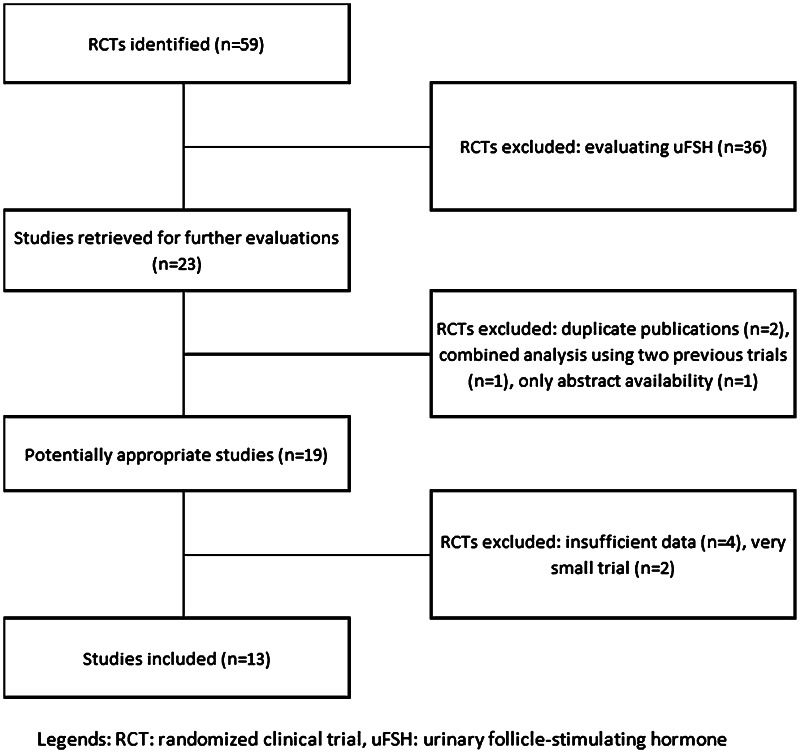
Fig. 1: Identification and selection of the studies to be included
Fig. 1. From PMC4555088, CC BY (terms); resized.

Human studies

✓ Positivehuman RCTFertil Steril · 2020

Randomized, assessor-blinded trial comparing highly purified human menotropin and recombinant follicle-stimulating hormone in high responders undergoing intracytoplasmic sperm injection.

n = 620 humansRandomized, open-label, assessor-blinded, parallel-group noninferiority trial

620 predicted high-responder women undergoing ICSI: HP-hMG was noninferior to rFSH for ongoing pregnancy (35.5% vs 30.7%), with less OHSS (9.7% vs 21.4%) and similar cumulative live birth (50.6% vs 51.5%).

Key resultOngoing pregnancy rate 35.5% with HP-hMG vs 30.7% with rFSH (difference 4.7%, 95% CI -2.7%, 12.1%), noninferiority established; HP-hMG was associated with significantly lower OHSS (21.4% vs 9.7%, difference -11.7%, 95% CI -17.3%, -6.1%).
Studied
Women predicted to be high responders (AMH ≥5 ng/mL) undergoing ICSI in a GnRH antagonist cycle
Compared with
Recombinant FSH (rFSH)
Main outcome
Ongoing pregnancy rate after fresh transfer
Sample
620 women with AMH ≥5 ng/mL
Authors' conclusion
In high responders, HP-hMG provided comparable efficacy to rFSH with fewer adverse events, including pregnancy loss, suggesting an optimized risk/benefit profile.
Limitations
Open-label (assessor-blinded) design.
✗ Negativehuman RCTJ Clin Endocrinol Metab · 1987

Treatment of severe oligospermia with human chorionic gonadotropin/human menopausal gonadotropin: a placebo-controlled, double blind trial.

n = 39 humansDouble-blind, placebo-controlled randomized trial13 weeks of treatment, then follow-up examinations

Double-blind, placebo-controlled trial in 39 men with oligospermia and normal gonadotropins: 13 weeks of hCG/hMG did not improve sperm concentration, motility or morphology vs placebo.

Key resultSperm concentration, motility and normal morphology were similar in both groups at all times; 2 wives became pregnant in the hCG/hMG group and none in the placebo group.
Studied
Normogonadotropic men with severe oligospermia
Compared with
Saline (NaCl) injections
Main outcome
Semen parameters (sperm concentration, motility, morphology)
Sample
39 men (19 active, 20 placebo)
Authors' conclusion
hCG/hMG did not improve semen parameters versus placebo in these men, and treatment outcome could not be predicted from pre-treatment GnRH and hCG tests.
Limitations
Small trial (39 men).
✓ Positivehuman trialHum Reprod · 2000

Ovarian stimulation for assisted reproduction with HMG and concomitant midcycle administration of the GnRH antagonist cetrorelix according to the multiple dose protocol: a prospective uncontrolled phase III study.

n = 346 humansProspective uncontrolled phase III studyMean 10.4 days of HMG stimulation

Uncontrolled phase III study of 346 women stimulated with hMG plus cetrorelix for IVF/ICSI: ongoing clinical pregnancy rate 24% per transfer; severe OHSS in 0.6%.

Key resultOngoing clinical pregnancy rate was 24% per transfer; premature luteinization occurred in 0.9% and severe OHSS in 0.6%.
Studied
Women with normal ovulatory function undergoing IVF or ICSI
Main outcome
Premature luteinization, pregnancy rate, OHSS
Sample
346 women
Authors' conclusion
HMG stimulation with multiple-dose cetrorelix from day 6 was associated with a low incidence of premature luteinization and severe OHSS.
Limitations
Uncontrolled study with no comparator group.
✓ Positivehuman trialJ Pediatr Endocrinol Metab · 1999

Gonadotropin treatment of hypogonadotropic hypogonadal adolescents.

n = 37 humansTreatment series (hCG/hMG)First two years of treatment

37 hypogonadotropic hypogonadal adolescent boys treated with hCG/hMG: testicular volume rose from about 2 to 9 ml and testosterone rose to the normal range; results were poorer with cryptorchidism.

Key resultTesticular volume rose from 1.98 +/- 1.2 to 9 +/- 3.3 ml and testosterone from 0.26 +/- 0.04 to 5.3 +/- 0.8 ng/ml.
Studied
Adolescents with hypogonadotropic hypogonadism
Compared with
Testosterone substitution (compared in the authors' conclusion)
Main outcome
Testicular volume and testosterone
Sample
37 hypogonadal adolescents
Authors' conclusion
hCG/hMG had a better outcome than testosterone for puberty induction, with worse results in cryptorchidism. Longer studies are needed on later spermatogenesis.
Limitations
No randomized control group reported in the abstract.
? Inconclusivehuman observationalCeska Gynekol · 2024

Comparing highly purified human menopausal gonadotropin and recombinant follicle stimulating hormone in poor ovarian reserve patients undergoing intracytoplasmic sperm injection.

n = 165 humansRetrospective cohort study

Retrospective cohort of 165 women with poor ovarian reserve: HP-hMG and rFSH gave similar oocyte numbers, clinical pregnancy and live birth rates.

Key resultClinical pregnancy and live birth rates did not differ significantly (P = 0.310 and P = 0.652 respectively); total gonadotropin dose was higher with rFSH (P < 0.001).
Studied
Poor ovarian reserve patients aged 18-45 undergoing IVF in short GnRH antagonist cycles
Compared with
Recombinant FSH (rFSH)
Main outcome
Pregnancy outcomes, oocyte numbers, embryo quality, hormone levels
Sample
165 patients (72 hp-hMG, 93 rFSH)
Authors' conclusion
Neither hp-hMG nor rFSH showed superiority in patients with poor ovarian reserve, indicating similar effectiveness.
Limitations
Retrospective, non-randomized.
✓ Positivehuman observationalEur J Endocrinol · 1998

Pulsatile GnRH or human chorionic gonadotropin/human menopausal gonadotropin as effective treatment for men with hypogonadotropic hypogonadism: a review of 42 cases.

n = 42 humansCase series / retrospective review of treated patientsTesticular volume doubled within 5-12 months of therapy

42 men with hypogonadotropic hypogonadism treated with hCG/hMG or pulsatile GnRH: sperm appeared in the ejaculate in 54 of 57 treatment courses, and pregnancies occurred in 26 of 36 courses aimed at conception.

Key resultSpermatogenesis was induced in 54/57 courses and pregnancies occurred in 26/36 courses.
Studied
Men with secondary (hypogonadotropic) hypogonadism: hypothalamic disorders (IHH, Kallmann syndrome) and hypopituitarism
Compared with
GnRH vs hCG/hMG in hypothalamic patients (non-randomized)
Main outcome
Induction of spermatogenesis and pregnancy
Sample
42 men, 57 treatment courses
Authors' conclusion
GnRH or hCG/hMG are effective therapies for patients with IHH or Kallmann syndrome; no significant differences between them in time to sperm or pregnancy rates.
Limitations
Uncontrolled case series; groups not randomized.

Verdicts are judged on each paper's own main outcome; grades run from A (strong human evidence) to D (little or none). Details are read from the abstracts, and figures are reproduced only from openly licensed full texts. Not medical advice.