Peptide Price Finder

Home · Research · Inflammation & immune

PNC-27 research

What published studies found for PNC-27: 10 papers, 0 in humans, with sample sizes and key results.

C
Mostly animal studies
Why: No human trials; evidence is cancer cell-line work plus a few mouse tumor studies, mostly from the developer's group.

PNC-27 (a p53-derived HDM-2-binding peptide fused to a penetratin sequence) has been studied only in cancer cell lines and a few mouse tumor models; there are no published human trials. Most of the work comes from a single research group.

✓ 8 positive~ 1 mixed? 1 inconclusive

No human safety or efficacy data in the published literature; selectivity for cancer over normal cells is shown only in cell and mouse studies.

US compounding: Not compoundable. Not an FDA-approved drug and not nominated for FDA's 503A bulks list, so US pharmacies can't legally compound it. Status for every peptide.

Browse and filter these papersPNC-27 prices and vendors

Reviews

? InconclusivereviewBiomedicines · 2024

Poptosis or Peptide-Induced Transmembrane Pore Formation: A Novel Way to Kill Cancer Cells without Affecting Normal Cells.

No new dataNarrative review

Review by the developers summarizing cell and nude-mouse data on PNC-27/PNC-28 pore formation in cancer cells; proposes them as potential general anti-cancer agents, with no human data presented.

Studied
Narrative review of PNC-27/PNC-28 peptide-induced poptosis
Authors' conclusion
PNC-27 and PNC-28 bind membrane HDM-2 on cancer cells and form pores causing necrosis, with no effect on normal cells in reported studies; the authors suggest they may be effective general anticancer agents.
Limitations
Review of mostly preclinical work; no human trials.
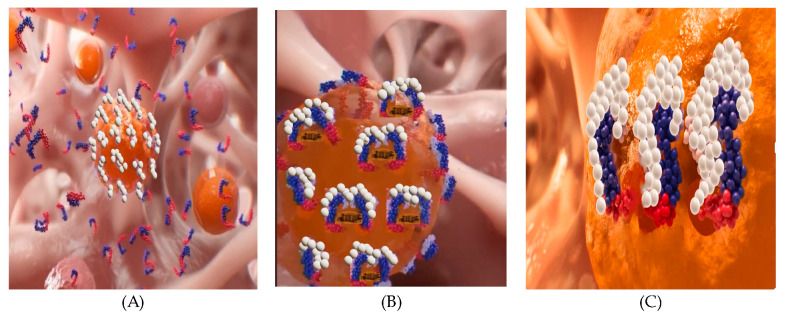
Figure 8: Model for PNC-27- and PNC-28-induced transmembrane pore formation in cancer cells, shown as occurring in three discrete steps: (A) Cancer ce
Figure 8. From PMC11201261, CC BY (terms); resized.

Animal & lab studies

✓ PositiveanimalLeukemia · 2020

Targeting cell membrane HDM2: A novel therapeutic approach for acute myeloid leukemia.

Humans and animalsIn vitro and in vivo (primary and secondary transplant) experiments

In human and mouse AML cells and transplant mouse models, PNC-27 killed leukemic blasts and leukemia stem cells while sparing normal hematopoietic stem cell activity.

Studied
Human and mouse AML blasts and leukemia stem cells; human and murine AML transplant models; wild-type mice
Main outcome
Killing of AML bulk blasts and leukemia stem cells; effect on normal HSC activity
Authors' conclusion
Membrane HDM2 is a novel target; PNC-27 selectively killed AML cells including leukemia stem cells in these models, with minimal off-target hematopoietic toxicity.
Limitations
Preclinical (cells and mouse models); sample sizes not given in abstract.
✓ PositiveanimalAnn Clin Lab Sci · 2017

Synergy between Paclitaxel and Anti-Cancer Peptide PNC-27 in the Treatment of Ovarian Cancer.

Humans and animalsIn vitro cytotoxicity with isobologram analysis, plus in vivo combination with weekly paclitaxel

In ovarian cancer cells and an intraperitoneal mouse model, PNC-27 acted synergistically with paclitaxel and adding it significantly reduced tumor growth.

Key resultIsobologram showed synergy between PNC-27 and paclitaxel (combination index <1)
Studied
ID8 ovarian cancer cells and an intraperitoneal ID8 mouse model
Compared with
Paclitaxel alone
Main outcome
Cell viability, synergy (combination index), tumor growth
Authors' conclusion
PNC-27 acts synergistically with paclitaxel, could target cells surviving paclitaxel, and added to weekly paclitaxel significantly reduced tumor growth in mice.
Limitations
Mouse ovarian cancer cell line model; sample sizes not given in abstract.
✓ PositiveanimalAnticancer Res · 2021

Molecular Targeting of H/MDM-2 Oncoprotein in Human Colon Cancer Cells and Stem-like Colonic Epithelial-derived Progenitor Cells.

Humans and animalsCell assays (flow cytometry, MTT, LDH, annexin V, caspase 3) and bioluminescence imaging of tumor growth

PNC-27 killed six colon cancer cell lines (including CD44+ stem-like cells) but not a normal colon line, and caused necrosis of tumor nodules but not normal tissue in vivo.

Studied
Six human colon cancer cell lines, one normal cell line (CCD-18Co), and in vivo tumors
Main outcome
Cell death and tumor growth
Authors' conclusion
PNC-27 co-localized with membrane HDM-2 only in cancer cells, caused necrosis of tumor nodules but not normal tissue, and selectively killed colon cancer stem cells.
Limitations
Preclinical; animal numbers not given in abstract.
✓ PositiveanimalNanomedicine (Lond) · 2017

PNC27 anticancer peptide as targeting ligand significantly improved antitumor efficacy of Doxil in HDM2-expressing cells.

Humans and animalsCell and mouse tumor studies comparing PNC27-Doxil with Doxil

PNC27 was attached to liposomal doxorubicin (Doxil) as a targeting ligand; in HDM2-positive C26 colon tumor mice it improved efficacy over Doxil alone, but not in HDM2-negative B16F0 melanoma.

Studied
C26 colon carcinoma (HDM2 positive) and B16F0 melanoma (HDM2 negative) cells and tumor-bearing BALB/c and C57BL/6 mice
Compared with
Doxil without PNC27
Main outcome
Cellular uptake, cytotoxicity and tumor therapeutic efficacy
Authors' conclusion
The authors conclude PNC27 is a promising targeting ligand for Doxil against HDM2-positive cancers.
Limitations
PNC27 was used as a targeting ligand, not as a stand-alone drug; mouse models only.
✓ Positivein vitroAnn Clin Lab Sci · 2015

Ex vivo Efficacy of Anti-Cancer Drug PNC-27 in the Treatment of Patient-Derived Epithelial Ovarian Cancer.

Cells / labEx vivo cell culture assays (MTT, LDH)

PNC-27 inhibited growth of and was cytotoxic to primary ovarian cancer cells freshly isolated from two patients, and to chemotherapy-resistant ovarian cancer lines.

Studied
Primary cultures from two patient ovarian cancers (mucinous cystadenocarcinoma, high-grade papillary serous carcinoma) and established ovarian lines
Compared with
Control peptide PNC-29
Main outcome
Growth inhibition and cytotoxicity
Authors' conclusion
PNC-27 inhibited growth of and was cytotoxic to freshly isolated primary ovarian cancer cells and chemotherapy-resistant lines; PNC-29 had no effect. Authors see potential as a treatment.
Limitations
Only two primary patient-derived cell lines; in vitro only.
✓ Positivein vitroProc Natl Acad Sci U S A · 2010

Anticancer peptide PNC-27 adopts an HDM-2-binding conformation and kills cancer cells by binding to HDM-2 in their membranes.

Cells / labStructural comparison, colocalization and transfection experiments

HDM-2 was found in the membranes of several cancer cell lines but not normal lines; PNC-27 bound membrane HDM-2, and normal cells engineered to express surface HDM-2 became susceptible.

Studied
Cancer cell lines, untransformed cell lines and HDM-2-transfected MCF-10-2A cells
Main outcome
Membrane HDM-2 expression and PNC-27 susceptibility
Authors' conclusion
PNC-27 targets HDM-2 in the membranes of cancer cells, allowing selective membranolysis; untransformed cells became susceptible after expressing membrane HDM-2.
Limitations
In vitro only.
✓ Positivein vitroAnticancer Res · 2020

Targeting Membrane HDM-2 by PNC-27 Induces Necrosis in Leukemia Cells But Not in Normal Hematopoietic Cells.

Cells / labIn vitro assays (flow cytometry, MTT, LDH release, annexin V, caspase-3)

In acute myeloid leukemia cell lines expressing membrane HDM-2, PNC-27 induced necrotic cell death, while normal hematopoietic cells were not affected.

Key resultPNC-27 induced necrosis and LDH release within 4 h in cells expressing high membrane HDM-2
Studied
Human AML cell lines U937, OCI-AML3 and HL60
Main outcome
Membrane HDM-2 expression, viability and cytotoxicity
Authors' conclusion
Targeting membrane HDM-2 with PNC-27 showed significant anti-leukemia activity in leukemic cell lines and could be a potential strategy to treat leukemia.
Limitations
In vitro cell lines only.
~ Mixedin vitroJ Biol Chem · 2010

Chondroitin sulfate as a molecular portal that preferentially mediates the apoptotic killing of tumor cells by penetratin-directed mitochondria-disrupting peptides.

Cells / labIn vitro comparison of PNC27 with engineered peptides carrying different cell-penetrating leaders

In an independent-group cell study, PNC27 killed tumor cells at IC50 values 2-3 times lower than in normal cells, but swapping its penetratin leader for other cell-penetrating peptides removed that selectivity; chondroitin sulfate on tumor cells helped entry.

Key resultIC50 values of PNC27 in tumor cells were 2-3 times lower than in normal cells
Studied
Human tumor cell lines and normal cells
Compared with
Normal cells and peptides with other leader sequences
Main outcome
IC50 cytotoxicity in tumor vs normal cells; chondroitin sulfate dependence
Authors' conclusion
The leader peptide penetratin contributes to the preferential cytotoxicity of Antp-directed peptides, and chondroitin sulfate overexpression on tumor cells is an important molecular portal.
Limitations
Cell lines only; selectivity was modest (2-3 fold) and depended on the penetratin leader.
✓ Positivein vitroCancer Ther · 2007

Novel peptides from the RAS-p21 and p53 proteins for the treatment of cancer.

Cells / labIn vitro testing of computer-designed ras-p21 and p53 peptides linked to penetratin

Developer's early report: p53 peptides linked to penetratin (the PNC-27 design) induced necrosis in 13 human cancer cell lines but not in normal pancreatic acinar, breast epithelial or stem cells.

Key result100 percent tumor cell necrosis in 13 different human cancer cell lines with no effect on normal pancreatic acinar, breast epithelial cells or human stem cells
Studied
Human cancer cell lines and untransformed cell lines
Compared with
Untransformed normal cells
Main outcome
Cancer cell necrosis and effect on normal cells
Authors' conclusion
The authors present these peptides as candidate cancer therapeutics selective for cancer cells.
Limitations
Cell lines only; from the group that designed the peptides.

Verdicts are judged on each paper's own main outcome; grades run from A (strong human evidence) to D (little or none). Details are read from the abstracts, and figures are reproduced only from openly licensed full texts. Not medical advice.