Thymulin
A nine-amino-acid thymus hormone that needs zinc to work; involved in T-cell maturation and studied for inflammation and hair loss.
Not approved. Research use only.
Look it up on Wikipedia11 listings across 10 independently tested vendors, ranked by price per milligram after coupon codes anyone can use. Vendors you can only order from by message are hidden.
Not an FDA-approved drug and not nominated for FDA's 503A bulks list, so US pharmacies can't legally compound it.
Daily price tracking started October 7, 2026; a price-history chart appears here once a few days have been collected.
| Vendor | Trust | Listing | Vials | Price | Per mg | |
|---|---|---|---|---|---|---|
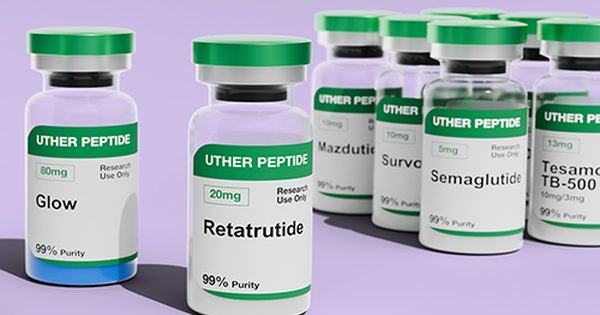
Uther #62 by metascore · China |
Metascore 79Finnrick 64%Bought vials 105% of label · 73 testsTitrateLabNo report for thisOnline checkout |
Thymulin 20mg (10 Vials / Kit) | 10 × 20 mg = 200 mg | $100.00 $10.00 per vial |
$0.500 | Buy |
Polaris Peptides #20 by metascore · US? |
Metascore 84Finnrick 63%Bought vials 110% of label · 99 testsTitrateLab · PeptideBase · PeptideCheckedNo report for thisOnline checkout |
Thymulin 100mg (Thymalin) | 1 × 100 mg | $185.00 | $1.85 | Buy |
Eros Peptides #129 by metascore · US, GA 30339 |
Metascore 74 medium confidenceFinnrick 77%Bought vials 110% of label · 3 testsTitrateLab · Peptide CriticNo report for thisOnline checkout |
Thymulin (Thymalin) 10MG | 1 × 10 mg | $25.49 | $2.55 | Buy |
Skye Peptides #72 by metascore · US: CA |
Metascore 78Finnrick 57%Bought vials 114% of label · 92 testsTitrateLabLab 99.8% pureConfirmed with lab: 25 of 25Account needed |
Thymulin (CAS: 63958-90-7) 10 mg | 1 × 10 mg | $39.00 | $3.90 | Buy |
Polaris Peptides #20 by metascore · US? |
Metascore 84Finnrick 63%Bought vials 110% of label · 99 testsTitrateLab · PeptideBase · PeptideCheckedNo report for thisOnline checkout |
Thymulin 10mg | 1 × 10 mg | $40.00 | $4.00 | Buy |
Alpha BioMed #281 by metascore · US |
Thymalin (Thymulin) (20mg) | 1 × 20 mg | $80.00 | $4.00 | Buy | |
Paramount Peptides #133 by metascore · US CA |
Metascore 74Finnrick 64%PepIndex 55/100Bought vials 114% of label · 65 testsTitrateLab · Peptide CriticNo report for thisOnline checkout |
Thymalin (Thymulin) (20mg) | 1 × 20 mg | $80.75 | $4.04 | Buy |
Simple Peptide #25 by metascore · US, FL 33446 |
Metascore 83Finnrick 62%PepIndex 82/100Bought vials 100% of label · 44 testsTitrateLabNo report for thisOnline checkout |
Thymulin | 1 × 20 mg | $84.00 | $4.20 | Buy |
Tydes #41 by metascore · US: NC |
Metascore 80Finnrick 68%Bought vials 117% of label · 44 testsTitrateLab · Peptide CriticNo report for thisConfirmed with lab: 16 of 16Online checkout |
Thymulin 10mg | 1 × 10 mg | $54.99 | $5.50 | Buy |
Biolongevity Labs #166 by metascore · US, Akron, OH 44321 |
Metascore 73Finnrick 71%PepIndex 58/100Bought vials 102% of label · 34 testsTitrateLab · Peptide CriticNo report for thisOnline checkout |
Thymulin Peptide (10mg) | 1 × 10 mg | $64.97 | $6.50 | Buy |
Peptide Group Buy PGB #39 by metascore · US |
Thymulin 10mg | 1 × 10 mg | $65.00 | $6.50 | Buy |

Mixing a 10 mg vial
What each common amount of bacteriostatic water gives you on a U-100 insulin syringe. Pick a vial size above to change it.
| Water | Strength | Per 10 units (0.1 mL) | Per unit |
|---|---|---|---|
| 1 mL | 10 mg/mL | 1,000 mcg | 100 mcg |
| 2 mL | 5 mg/mL | 500 mcg | 50 mcg |
| 3 mL | 3.333 mg/mL | 333.3 mcg | 33.33 mcg |
| 5 mL | 2 mg/mL | 200 mcg | 20 mcg |
Published lab results
2 certificates of analysis that vendors publish for Thymulin. Numbers are only filled in where the document is readable text; image-only COAs are linked without numbers. A vendor's own COA shows one tested sample, not every batch.
Doses studied in research Animal or lab studies only
What was given to people (or animals) in published studies and official labels, each linked to its source. This is not a recommendation: study products, purity and supervision differ from research-grade vials.
Animal studies: In rodent pain and inflammation studies, systemic injections of about 1-25 microg of thymulin per animal reduced endotoxin-induced inflammatory pain, while low (nanogram) doses produced hyperalgesia; other mouse and rat studies did not state doses in their abstracts.
No human treatment trials were found; in people thymulin has been measured only as a marker of zinc status. Doses in animal studies do not translate directly to people.
What the research says
Thymulin is a zinc-dependent thymic hormone whose anti-inflammatory, pain-relieving, neuroprotective and immune effects have been shown only in mice and rats, including mouse multiple-sclerosis models and Russian rat pain and stress studies. No human treatment trials were found; the human literature consists of reviews and its use as a marker of zinc status.
Key papers ✓ 7~ 2? 1
-
Physiology and therapeutic potential of the thymic peptide thymulin.No new dataNarrative review
Review of thymulin physiology: anti-inflammatory and analgesic effects and gene-therapy approaches are supported by animal models; human therapeutic potential is yet to be assessed.
Study details
- Main outcome
- Physiology, neuroendocrine and anti-inflammatory actions of thymulin and gene therapy approaches
- Authors' conclusion
- Thymulin and its analog show anti-inflammatory and analgesic properties in the CNS, and thymulin gene therapy may restore thymulin levels in thymodeficient animal models and eventually in humans.
- Limitations
- Narrative review; supporting evidence is from animal models.
-
Role of thymulin or its analogue as a new analgesic molecule.No new dataNarrative review of the authors' rodent studies on thymulin and its analogue PAT
Review of rodent work: low (nanogram) doses of thymulin increased pain sensitivity via inflammatory mediators, while higher doses or an analogue reduced inflammatory pain and sickness behavior.
Study details
- Main outcome
- Pain, hyperalgesia and inflammatory cytokines
- Authors' conclusion
- Low-dose thymulin caused hyperalgesia while higher doses of thymulin or the analogue PAT reduced inflammatory pain and cytokines. The authors indicate a possible therapeutic use as analgesic and anti-inflammatory drugs; mechanism not fully elucidated.
- Limitations
- Review; mechanism of action is not fully elucidated.
-
Thymulin restrains age-associated myeloid inflammation and enhances cancer immunotherapy.Humans + animalsHeterochronic parabiosis, bone marrow chimeras, and tumor immunotherapy experiments
Thymulin declined with age and suppressed inflammatory cytokine production by aged myeloid cells; in older mice it improved tumor control and responses to anti-PD-L1 immunotherapy.
Study details
- Studied
- Aged and young mice (and humans for myeloid cell frequency); breast tumor models
- Compared with
- Young vs aged hosts
- Main outcome
- Myeloid inflammatory cytokine production; tumor control and survival with anti-PD-L1
- Authors' conclusion
- Thymulin suppresses pro-inflammatory myeloid cytokine production via NF-kB inhibition and enhances antitumor T-cell immunity and anti-PD-L1 response in an age-dependent manner, suggesting a strategy to improve immunotherapy in older individuals.
- Limitations
- Mostly mouse data.
-
Thymulin treatment attenuates inflammatory pain by modulating spinal cellular and molecular signaling pathways.Animalssize not reported21 daysIntraperitoneal thymulin at different doses and timings
In rats with adjuvant-induced inflammation, thymulin reduced paw swelling and heat hypersensitivity and lowered spinal microglial activation and TNF-alpha/IL-6.
Study details
- Studied
- Rats with Complete Freund's adjuvant (CFA)-induced inflammation
- Compared with
- CFA without thymulin
- Main outcome
- Thermal hyperalgesia, paw edema, spinal microglial activity, p38 MAPK, cytokines
- Authors' conclusion
- Thymulin notably reduced CFA-induced thermal hyperalgesia and paw edema, probably through inhibition of spinal microglia and reduced p38 MAPK phosphorylation and pro-inflammatory cytokines.
- Limitations
- Rat model of inflammatory pain.
-
Thymulin, free or bound to PBCA nanoparticles, protects mice against chronic septic inflammation.Animalssize not reportedFree versus polybutylcyanoacrylate nanoparticle-bound thymulin treatment
In mice with chronic LPS-induced septic inflammation, thymulin reduced fever, inflammatory cytokines and lymphocyte death; a nanoparticle-bound form worked better in some respects.
Study details
- Studied
- Mice with chronic inflammation induced by gradually raised lipopolysaccharide doses
- Compared with
- LPS-treated untreated mice
- Main outcome
- Signaling pathway activity, apoptosis, cytokines, melatonin and serotonin
- Authors' conclusion
- Thymulin suppressed the proinflammatory response in LPS-treated mice, indicating potential for thymulin co-therapy in sepsis; nanoparticle-bound thymulin was more effective in several respects.
- Limitations
- Mouse LPS model.
-
Thymulin and peroxiredoxin 6 have protective effects against streptozotocin-induced type 1 diabetes in mice.Animalssize not reportedProlonged treatment with thymulin or peroxiredoxin 6 (PRDX6)
In mice with streptozotocin-induced type 1 diabetes, prolonged thymulin treatment reduced physiological impairments and inflammatory cytokines.
Study details
- Studied
- Mice with streptozotocin-induced type 1 diabetes
- Compared with
- Untreated diabetic mice
- Main outcome
- Blood glucose, body weight, organ cell counts, cytokines, NF-kB and JNK activity
- Authors' conclusion
- Both thymulin and PRDX6 reduced physiological impairments in diabetic mice and showed anti-inflammatory functions via different mechanisms; the authors suggest possible supporting use in COVID-19 patients with diabetes.
- Limitations
- Mouse model; the COVID-19 suggestion is speculative.
-
Nanoparticle-based thymulin gene therapy therapeutically reverses key pathology of experimental allergic asthma.Animalssize not reportedAssessed 20 days after treatmentSingle intratracheal dose of thymulin-expressing plasmid in mucus-penetrating nanoparticles
In mice with established allergic asthma, a single inhaled dose of thymulin-expressing gene therapy normalized lung inflammation, fibrosis and mechanics (gene therapy, not the peptide itself).
Study details
- Studied
- Mice with established experimental allergic asthma
- Main outcome
- Lung inflammation, fibrosis and mechanical dysregulation
- Authors' conclusion
- Inhaled thymulin gene therapy normalized key asthmatic lung pathology in mice through anti-inflammatory and antifibrotic effects, opening a possible avenue for clinical development.
- Limitations
- Mouse model of asthma; gene therapy, not peptide dosing.
-
Protective Effect of PBCA Nanoparticles Loaded with Thymulin Against the Relapsing-Remitting Form of Experimental Autoimmune Encephalomyelitis in Mice.Animalssize not reportedAnimal study comparing free thymulin and PBCA nanoparticle-bound thymulin in rEAE
In mice with relapsing-remitting experimental autoimmune encephalomyelitis (a multiple-sclerosis model), thymulin, especially bound to PBCA nanoparticles, eased symptoms and lowered plasma cytokines and NF-kB/JNK activation.
Study details
- Studied
- Mice with relapsing-remitting experimental autoimmune encephalomyelitis (rEAE)
- Compared with
- Untreated rEAE mice (and free vs nanoparticle-bound thymulin)
- Main outcome
- Symptom severity score, plasma cytokines (IFN-gamma, IL-17), NF-kB and SAPK/JNK activation
- Authors' conclusion
- Thymulin significantly alleviated rEAE symptoms and lowered cytokines; the nanoparticle-bound form was more effective, and the authors consider it a prospective treatment for this pathology.
- Limitations
- Mouse model only; group sizes not stated in abstract.
-
Protective effect of exogenous peroxiredoxin 6 and thymic peptide thymulin on BBB conditions in an experimental model of multiple sclerosis.Animalssize not reportedAnimal study of thymulin, peroxiredoxin 6, and both together
In mice with relapsing-remitting EAE, thymulin and peroxiredoxin 6 each improved blood-brain barrier integrity and symptoms, and giving both together produced complete symptomatic restoration.
Study details
- Studied
- Mice with relapsing-remitting experimental autoimmune encephalomyelitis
- Compared with
- Untreated EAE mice
- Main outcome
- Blood-brain barrier condition (Evans blue, tight junction proteins, lymphocyte infiltration), EAE symptoms, cytokines
- Authors' conclusion
- Thymulin and Prdx6 improved BBB condition and EAE symptoms; together they gave complete symptomatic restoration, which the authors present as a prospective strategy for multiple sclerosis.
- Limitations
- Mouse model only; group sizes not stated in abstract.
-
Влияние тимических пептидов на анальгезию, вызванную острой и подострой иммобилизациейAnimalssize not reportedAcute (3 h) and subacute (12 h) immobilizationAnimal experiment comparing thymic peptides (thymulin, thymosin fraction 5, thymus extract) with saline and spleen polypeptide controls, with naloxone challenge
In Wistar rats, thymulin raised the pain threshold in unstressed animals and blunted the further rise in threshold caused by 3 h and 12 h immobilization stress (p=0.022 and p=0.027), with a smaller opioid component of the stress analgesia.
Key resultStress-induced rise in pain threshold was smaller with thymulin than in controls (3 h immobilization p=0.022; 12 h p=0.027)
Study details
- Studied
- Male Wistar rats
- Compared with
- Saline and spleen polypeptide controls
- Main outcome
- Pain sensitivity (tail-flick test) and opioid component of stress-induced analgesia
- Authors' conclusion
- The authors concluded that pre-activation of the opioid system by thymic polypeptides raises the non-opioid share of stress analgesia and prevents opioid system exhaustion.
- Limitations
- Rat study; group sizes not stated in the abstract.
Reported side effects
No human safety data in the published literature; rodent studies found that low doses can increase pain sensitivity.
✓ positive · ✗ negative · ~ mixed · ? inconclusive, judged on each paper's own main outcome. Grades: A strong human evidence → D little or none. Papers and verdicts are drawn from PubMed, Europe PMC and Russian journals (CyberLeninka); not medical advice.
Discussions elsewhere
Experiences and questions about Thymulin on other sites. Treat anecdotes with care.
Also sold in blends with Thymulin
Thymalin + Thymulin (2) · Thymosin Alpha-1 + Thymulin (5). The order planner uses these automatically when a blend is cheaper than separate vials.
Thymulin: questions people ask
What is Thymulin?
Zinc-dependent thymic hormone. A nine-amino-acid thymus hormone that needs zinc to work; involved in T-cell maturation and studied for inflammation and hair loss.
How much does Thymulin cost?
The cheapest Thymulin from an independently tested vendor is $0.500 per mg (Uther, Thymulin 20mg (10 Vials / Kit), $100.00). Across 11 listings from 10 vendors the median is $4.00 per mg.
Where can I buy Thymulin?
10 vendors tested by Finnrick sell Thymulin. The cheapest per mg right now: Uther ($0.500), Polaris Peptides ($1.85), Eros Peptides ($2.55). 2 of them publish a lab report (COA) for Thymulin; compare lab scores and reports in the table above before buying.
How much bacteriostatic water for 10 mg of Thymulin?
Adding 2 mL of bacteriostatic water to a 10 mg vial of Thymulin gives 5 mg/mL: each 10 units on a U-100 insulin syringe holds 500 mcg. With 1 mL it's 10 mg/mL (1,000 mcg per 10 units); with 3 mL, 3.333 mg/mL (333.3 mcg per 10 units). More water makes small amounts easier to measure. Mixing charts: 10 mg, 20 mg.
Is Thymulin FDA approved?
Not approved. Research use only.
Can Thymulin be compounded in the US?
Not an FDA-approved drug and not nominated for FDA's 503A bulks list, so US pharmacies can't legally compound it. Compounding status for every peptide.
Does Thymulin work? What does the research say?
Evidence grade C (mostly animal studies), from 10 papers: No human treatment trials; anti-inflammatory, pain and neuroprotective effects come from many mouse and rat studies. Thymulin is a zinc-dependent thymic hormone whose anti-inflammatory, pain-relieving, neuroprotective and immune effects have been shown only in mice and rats, including mouse multiple-sclerosis models and Russian rat pain and stress studies. No human treatment trials were found; the human literature consists of reviews and its use as a marker of zinc status. See the papers.
What dose of Thymulin was used in studies?
Thymulin is tested only in animals or cells. In rodent pain and inflammation studies, systemic injections of about 1-25 microg of thymulin per animal reduced endotoxin-induced inflammatory pain, while low (nanogram) doses produced hyperalgesia; other mouse and rat studies did not state doses in their abstracts. These are amounts used in published studies or official labels, not a recommendation.